 Cloud
Cloud6 min read
Why Your Cloud Strategy Should Start with This One Step
Cloud adoption is no longer optional; it has become a critical enabler of modern software development and digital transformation.
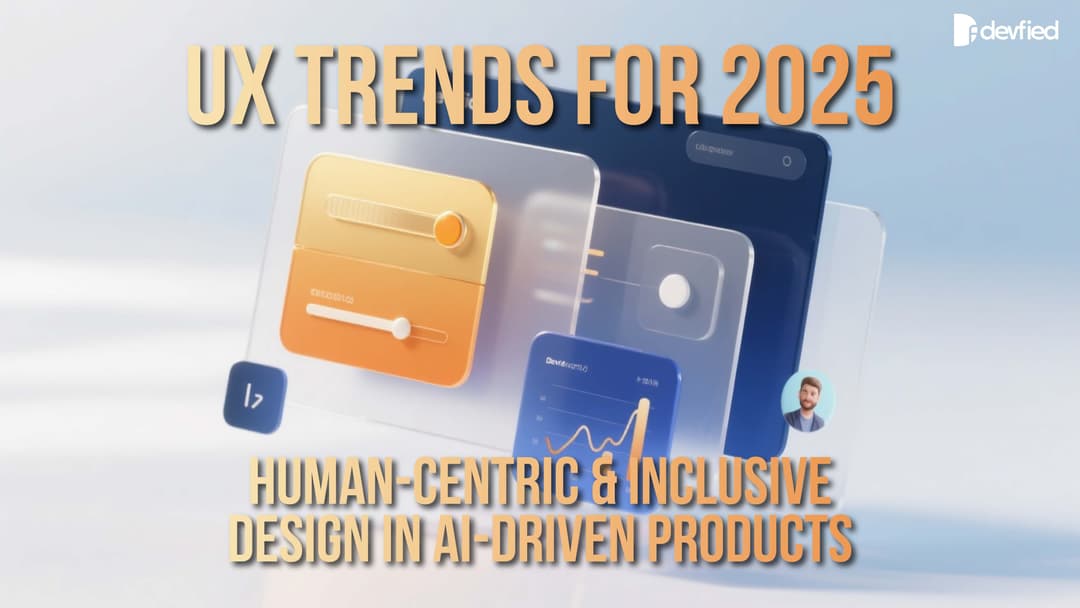
Read articleIn a world where AI is embedded in nearly every digital product, there's one truth we can't ignore: technology should serve people, not confuse or exclude them.
Devfied Team
Editorial
In a world where artificial intelligence is embedded in nearly every digital product, there's one truth we can't ignore: technology should serve people, not confuse or exclude them.
As we step into 2025, user experience (UX) design is shifting gears. No longer just about clean layouts and smooth interactions, it's now deeply focused on human-centric and inclusive design, especially in the age of AI.
Let's explore what this evolution means and why it matters more than ever.
AI is powerful, but without thoughtful design, it can feel cold, confusing, or even biased. Human-centric design means building with empathy: understanding real-world user needs, reducing complexity in AI-powered tools, and designing interfaces that guide, not overwhelm.
From smart assistants to predictive dashboards, users want clarity, not cleverness. In 2025, UX designers are putting feelings before features, making sure products are intuitive, meaningful, and yes, human.
Accessibility and inclusivity are no longer just "nice-to-haves"; they're core to product success. Whether it's voice-enabled navigation for visually impaired users, flexible language models that support non-native speakers, or low-contrast modes for neurodiverse audiences, inclusive UX design ensures everyone can engage with AI-powered products and feel seen while doing so.
For web app development and mobile app development, this shift demands smarter frameworks, broader testing, and constant feedback loops.
Ironically, while AI powers the backend, UX is now the bridge between human and machine. That means designing explainable AI outputs so users understand why a decision was made; offering control and transparency like undo buttons or data privacy options; and crafting journeys that adapt to user behavior, not force behavior to adapt.
The smartest AI won't win, the most usable AI will.
For software development companies, web development companies, and product teams across industries, this trend is a call to action: stop treating design as a late-stage add-on, and start embedding UX into every sprint, every AI model, every line of code. Those who do will build products that don't just function, they connect, empower, and grow.
At Devfied, we believe innovation should always come with empathy. Whether we're building AI-powered dashboards, crafting intuitive mobile apps, or deploying web-based platforms, our UX approach is simple: design with purpose, build with users, grow with integrity.
Because in the future of tech, the most powerful products will be the ones that feel personal.
CloudCloud adoption is no longer optional; it has become a critical enabler of modern software development and digital transformation.
Read article AI
AIGen Z and Gen Alpha developers aren't coding the same way we used to, they're faster, more experimental, and deeply integrated with tools previous generations barely imagined.
Read article Web
WebMany attractive websites exist, but they only help when they convert traffic into leads or customers, not when they exist only to look impressive.
Read article
Devfied®
Spots are limited. Get a free strategy call with tailored solutions, expert insights, and actionable steps for your next project.